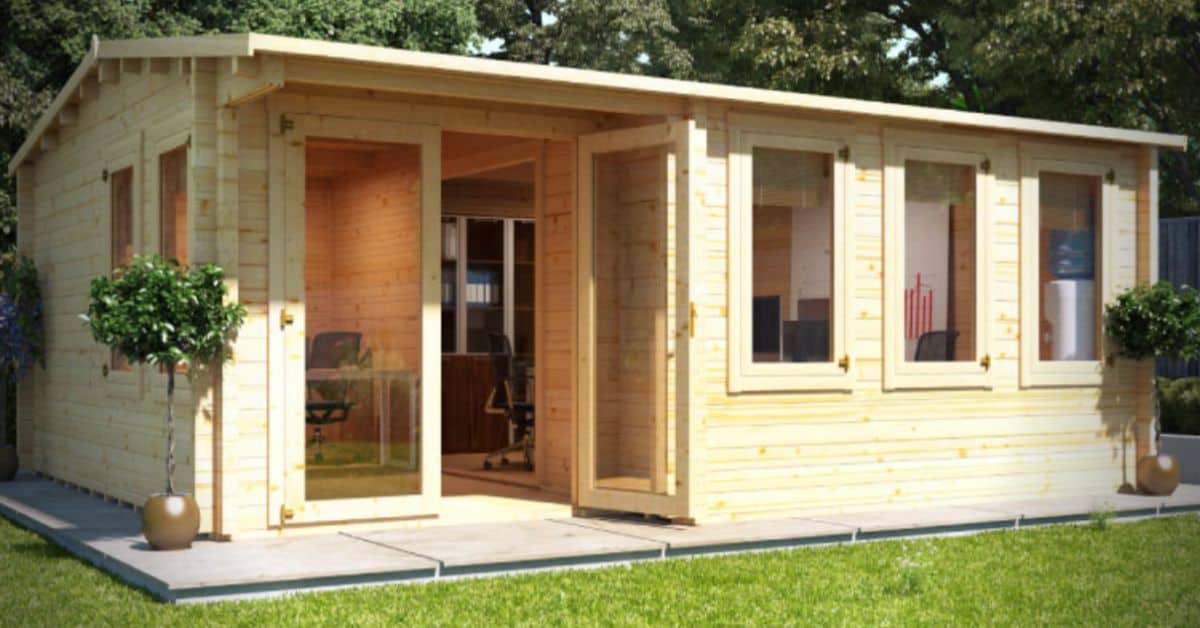
Converting a shed into an office is one of the cheapest ways to get a dedicated workspace at the bottom of the garden — but only if you go in with realistic expectations. A shed is built to store tools, not to keep a person warm and comfortable for eight hours a day, so turning one into a usable office is really about a handful of upgrades: insulation, heating, electrics and a decent finish. This guide walks through what those changes involve, what drives the cost, and how to do them without trapping damp inside your walls.
How Much Does It Cost to Convert a Shed Into an Office?
There’s no single figure, because the cost of a shed-to-office conversion is driven almost entirely by how far you take it. A basic conversion of a sound, existing shed — a bit of insulation, a plug-in heater and an extension lead run safely from the house — sits at the low end. A fully insulated, professionally wired, year-round office climbs considerably higher. The main things that move the number are:
- Insulation — materials for walls, floor and roof, plus internal cladding to cover it. The single biggest factor in whether the space is usable in winter. Roughly £150 to £1,600.
- Electrics — the largest variable cost. A qualified electrician running a proper armoured supply and consumer unit is a different order of expense to a temporary lead, and it’s the part you should never cut corners on. Roughly £600 to £3,000+.
- Heating — from an inexpensive plug-in tube or oil-filled radiator at the low end, up to a wall-mounted electric panel heater. Roughly £30 to £250.
- Flooring and finish — insulation board, moisture membrane and a floor covering, plus paint or lining boards for the walls. Roughly £100 to £600.
As a rule of thumb, spend your budget in that order: insulation first (it reduces heating cost forever), then safe electrics, then heating, then the finish. A thin, tired shed that needs structural repair before any of this may not be worth converting at all — more on that below.

Set Your Expectations First: Will a Shed Actually Stay Warm?
Be honest about what you’re starting with. A standard single-skin shed — especially thin overlap cladding — has effectively no thermal mass. In spring and autumn it will be fine for a few hours; in winter, an uninsulated shed will feel barely warmer inside than out, and any heater you run will be fighting a losing battle against the walls, roof and floor. Insulation is what changes a shed from a fair-weather workspace into a room you can actually use year-round. If comfort through winter matters to you, treat insulation as non-negotiable rather than optional.
Insulating Your Shed Office (and Protecting Against Damp)
Insulating the walls, floor and roof is the most effective single change you can make. It keeps heat in, cuts running costs and dampens outside noise. One important warning before you start, though: fixing insulation and internal cladding to the structure will almost always void the manufacturer’s guarantee, because you’re modifying the building and covering the timber you’d normally inspect for movement or damp. That’s a fair trade-off for many people — just make the decision knowingly, and take care to do it properly.
The bigger risk with a badly insulated shed isn’t the cold — it’s trapped moisture. Timber needs to breathe, and if you seal insulation tight against the cladding with no airflow, condensation forms in the wall and causes rot you can’t see. The basic approach:
- Leave a ventilation gap. Don’t pack insulation hard against the outer cladding — maintain a small air gap so the timber can breathe and moisture can escape.
- Add a vapour barrier. Fit a breathable membrane or vapour-control layer on the warm (inside) face of the insulation, before you clad over it, to stop room moisture reaching the cold timber.
- Insulate all three surfaces. Walls, floor and roof — heat is lost through all of them, and an uninsulated floor is a common weak point.
- Choose your material. Rigid PIR/foam boards cut to fit between the framing are efficient for their thickness; breathable mineral wool is cheaper. Either works if ventilation is respected.
- Clad over the top. Finish with plywood, OSB or plasterboard to give a wall you can paint and fix to.
- Keep trickle ventilation. Even a well-sealed office needs some airflow — an openable window or small vent — to manage the moisture a working person produces.
Heating a Converted Shed Office
Even with good insulation, most people want some heating for the colder months — it keeps the space comfortable and helps protect paperwork and electronics from damp. Electric options are simplest: a wall-mounted or portable radiator for quick warmth, or a low-wattage tube heater that’s cheap to run and takes up almost no space.
One thing worth designing around: when you’re sitting still at a desk, your body runs cooler than when you’re moving, and heat rises — so your feet and legs feel the cold long before the rest of you does. A heater positioned low, near the floor and your feet, will make the space feel far more comfortable than one mounted high on the wall, and often lets you run it at a lower setting. A small under-desk heater or a low-level tube heater is a good, efficient choice for a seated workspace.
Installing Electrics
An office needs power — a laptop, phone, lighting and probably a monitor and heater — so a proper electrical supply is almost always part of a shed conversion. This is the one area not to DIY. A permanent supply to an outbuilding must be installed by a qualified electrician and certified under Part P of the Building Regulations; doing it yourself can invalidate your home insurance and is genuinely dangerous. Plan ahead by telling the electrician how many sockets, light switches and separate circuits you’ll need, and everything you intend to run off the supply, so the circuit is sized correctly. A trailing extension lead from the house is fine for occasional, fair-weather use, but it isn’t a safe long-term solution for a working office.
When Converting Isn’t Worth It
Sometimes the honest answer is that your existing shed isn’t the right starting point. If it has structural problems or thin single-skin walls, the cost of repairing and upgrading it can provide a worse result than just buying a building designed for the job from the outset. In that case a purpose-built garden office is worth considering: it comes properly glazed, with thicker walls and a structure intended for year-round use, so you skip most of the insulation and weatherproofing work. See the BillyOh garden office range for buildings already suited to being an office.


